Product Education
The Science of Peel-and-Stick: Why SafeHandle Stays Stuck
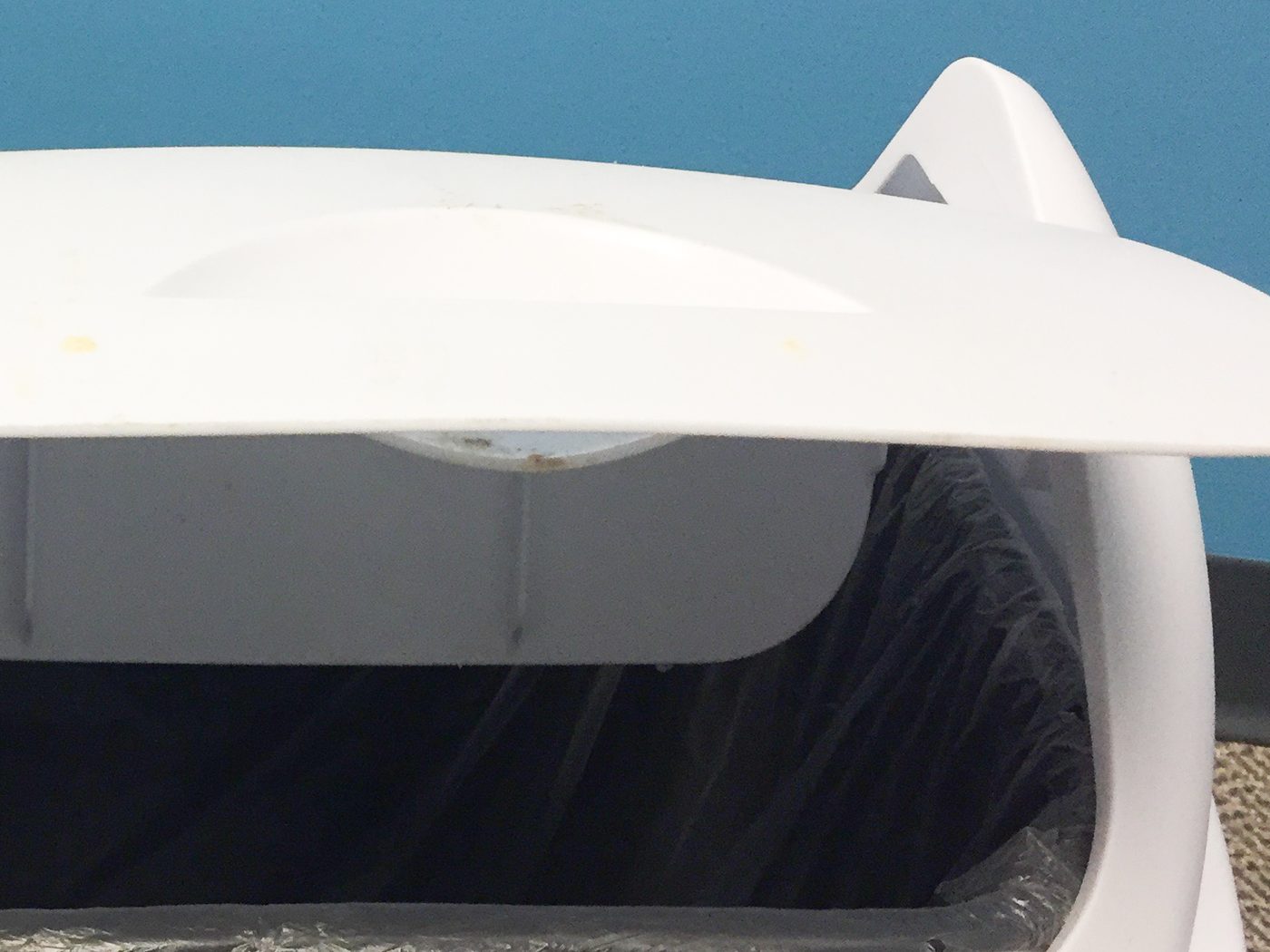
Modern industrial adhesives are remarkable in ways that aren't obvious. The pressure-sensitive adhesive (PSA) on a SafeHandle base is descended from research that 3M, Avery Dennison, Henkel, and a handful of specialty adhesive companies have been refining for over 50 years. The result is a class of adhesives that bond more strongly than most mechanical fasteners, last longer than most paints, and require zero maintenance.
Understanding why these adhesives work also explains the rare cases where they fail.
How PSAs actually bond
A pressure-sensitive adhesive doesn't dry, cure with heat, or react chemically with the surface. It bonds by something called "wetting" — the adhesive surface flowing into microscopic irregularities on the bonding surface and creating millions of tiny mechanical anchor points and intermolecular forces.
This is why pressure matters. The adhesive has to be physically pushed into surface contact. Without pressure, only the high points on each surface touch, and the bond is weak. With sustained pressure, the soft adhesive deforms and flows around every microscopic ridge, valley, and pit on the target surface.
Once full surface contact is achieved, intermolecular forces (van der Waals forces, primarily) hold the adhesive in place. These forces are weak individually but very strong cumulatively when integrated across millions of contact points.
Why surface preparation is everything
The reason isopropyl alcohol surface prep matters so much: any contamination on the bonding surface — oil, dust, soap film, water — sits between the adhesive and the surface, preventing the wetting process. The bond forms between the adhesive and the contamination layer instead of the actual lid material.
A clean surface bonds 2-10x more strongly than a contaminated surface, depending on the contamination type. Cooking grease is the worst because it's both oily (preventing wetting) and slippery (preventing the mechanical anchor points). Soap film is also bad. Plain dust is moderate. Light moisture is recoverable if you wait for it to dry.
Why our adhesive choice matters
Not all PSAs are equal. The cheap PSAs you find on tape from the dollar store work for paper, plastic packaging, and short-term use. They fail under temperature swings, lose strength over months, and don't tolerate surface flexing.
SafeHandle uses a higher-performance adhesive class that's specified for: long-term use (5+ years rated), temperature range from -40°F to 200°F, resistance to surface flex (the lid swings open and closed many times), and resistance to humidity. This is the same class of adhesive used to mount automotive emblems, exterior signage, and industrial labeling — environments where adhesive failure isn't tolerated.
The unit cost is higher than dollar-store tape adhesive (we pay roughly 8x more per square inch), but the failure rate is dramatically lower. We made this choice early on after seeing initial commercial failures in the early prototypes, and it's one of the reasons our 2-year commercial deployments have held up.
Why some surfaces are still hard
Even with industrial-grade PSA, certain surfaces resist bonding:
Polyethylene and polypropylene plastics have low surface energy (chemistry term meaning their surface molecules don't readily attract other molecules). Most adhesives struggle with these. SafeHandle's adhesive is specifically formulated to bond well to common kitchen plastics, including the ABS and high-density polyethylene used in most trash can lids, but very low-surface-energy plastics (some food-grade polypropylene) can still be challenging.
Heavily textured surfaces reduce the available bonding area. A pebbled or rough-cast plastic lid has maybe 60-70% of the contact surface that a smooth lid has. The adhesive still bonds, but with less safety margin.
Painted or coated surfaces sometimes bond well to the coating but the coating itself is weakly attached to the underlying material. The SafeHandle stays on, the paint comes off the lid. We've seen this on a few painted commercial trash cans. The fix is to install on a part of the lid where the coating is still well-bonded.
Greasy or oily surfaces as covered above — these defeat any PSA, period. Surface prep with isopropyl alcohol eliminates this issue 95% of the time.
Failure modes and rates
Across our commercial deployments and home customer feedback, the failure rate of properly-installed SafeHandle units is essentially zero after the first 48 hours. The 48-hour window is when surface prep failures show up — if you didn't clean properly, the unit comes off in this window. After 48 hours, units that have stayed on tend to stay on indefinitely.
This is consistent with the underlying physics — PSAs that achieve initial bond strength almost never fail later under normal conditions. The failures we do see beyond 48 hours come from external factors: extreme temperature exposure (a lid that ends up in a 110°F garage in summer), repeated solvent exposure (cleaning with strong solvents like acetone), or physical impact (someone slamming a heavy bag of trash directly onto the SafeHandle).
For a home user installing on a kitchen trash can lid, none of these conditions are likely. The realistic expected lifetime is "as long as the trash can lasts." Most kitchen trash cans last 5-15 years. SafeHandle should comfortably outlast the can.
Ready to stop touching your trash can lid?
Preorder SafeHandle — From $16.95Read next: 10 Spots in Your Kitchen You're Forgetting to Clean · The 400 Bacteria Per Square Inch Problem · More about our product